Posts

Load a dll into an AppDomain for reflection or execution and Unload it

.Net will allow you to easily load any dll you want to into the current AppDomain by simply calling Assembly.LoadFrom() with the path of the dll in question. However, this is only available for the current AppDomain, and as a result, the dll remains loaded for the duration of the AppDomain's lifetime. This may be ok, but if you want to simply load a dll, inspect it, and run some one-time operations on it, that seems a bit wasteful. In web development, it means you must shut down your web server to recompile the dll you're loading. So, the solution would seem to be to start up a new appDomain, load the dll in question, do your work, and then unload the appDomain. Gentlemen, start your compilers... namespace Utilities { public class SomeClass{ public static void RegisterApplication( string appPath) { if (File.Exists(appPath)) { var domainSetup = new AppDomainSetup() { ApplicationBase = AppDomain.CurrentDomain .BaseDirectory, Pr...
CSRF (Cross-Site Request Forgery) Handling in MVC

Phil Haack's talk on asp.net reminded me of the importance of handling CSRF attacks. In MVC, this is simply handled with a one-two punch. In your posting form, you need to include the Html.AntiForgeryToken() in the form as follows: The other thing is to add an [ValidateAntiForgeryToken] attribute to the targeted posting action in your controller as follows: [ValidateAntiForgeryToken] [HttpPost] // or MVC 1.0 style [AcceptVerbs(HttpVerbs.Post)] public virtual ActionResult Delete(FormCollection form, int id) { // code here to delete stuff return View(); } Also don't forget that we want to make sure that any state-changing operations are always posts! My new syntax highlighting is accomplished via a method outlined on Carter Cole's most excellent blog.

Linq to Entities and Custom Database Functions

Image
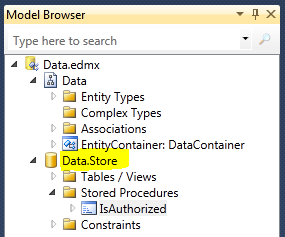
I've been using Linq to SQL since it came out. Linq to Entities didn't have any compelling functionality, and it was far less supported in the development community. Nobody seemed to be using it. For whatever reason, when the language group at Microsoft came out with Linq, the data group was slow on the uptake and that left the language group with the need for an actual database query layer, so Linq to SQL was born. There were rumors that Linq to SQL would not continue to evolve, but it certainly worked fine for what I needed. The 2009 Microsoft PDC had all kinds of interesting things, but absolutely nothing regarding Linq to SQL. The language group became enammored with .NET 4 and the dynamic language features and have apparently orphaned Linq to SQL. Not so the data group. The improvements to Linq to Entities seem to breathe new life into what had previously been a "me too" implementation of Linq. Certainly the biggest news about Linq to Entities relates to the new ...

jQuery and MVC Autosuggest while saving the selected Id

Yea, I know, boring title. But I really want to make sure I can find the code for how to do this one. jQuery is very cool. All the eye candy is nice, the syntax is excellent, but the real benefit is AJAX... The autocomplete jQuery library is extremely nice. It allows you to take a Json result from some url and suggest results to a text box. What I want is for the selected value to populate another input field (hidden) so that I have a real foreign key relationship to the item they selected. here's the html: <input class="location" id="LocationName"> <input id="LocationId" type="hidden" keyFor="LocationName"/> Or alternately you can use Html Helpers <%= Html.TextBox("LocationName", null, new {class = "location"}) %> <%= Html.Hidden("LocationId", null, new {keyFor = "LocationName"})%> and here is the supporting javascript: $(document).ready(function() { $('.loc...

It's all about presentation...

My last post, you may notice has code snippets that look somewhat professional. I found a cool online tool called Code2html It turns this: using System; using System.Collections.Generic; using System.Linq; using System.Web; using System.Web.UI; using System.Web.UI.WebControls; using System.Net.Mail; public partial class _Default : System.Web.UI.Page { protected void Page_Load(object sender, EventArgs e) { } protected void Button1_Click(object sender, EventArgs e) { MailMessage message = new MailMessage("FROM@domain.foo", "TO@domain.foo", "SYNCHRONOUS MESSAGE", "MESSAGE BODY"); SmtpClient smtp = new SmtpClient(); smtp.Send(message); } protected void Button2_Click(object sender, EventArgs e) { MailMessage message = new MailMessage("FROM@domain.foo", "TO@domain.foo", "ASYNCHRONOUS MESSAGE", "MESSAGE BODY"); SmtpClient smtp = new SmtpClient...

You had me at ehlo!

Image
It seems that a lot of websites send users email for lots of reasons. This introduces a bit of a problem when you are developing applications because as developers we don't necessarily want to put an smtp server on our development machine and network administrators are fairly selective about the open SMTP relays that they want on their network. ASP.net has a solution, and I have a solution. The asp.net solution is that the web server where your application will eventually live can (will) have a single machine configuration for the smtp settings. Every application can override this setting in the web.config file, but should actually just comment out the < mailsettings > section. During development, however, this configuration is useful: < configuration > < system.net > < mailSettings > < smtp from= "admin@foo.bar" deliveryMethod= "SpecifiedPickupDirectory" > < specifiedPickupDirectory pickupDirectoryLocation= "C...

ATLAS AJAX Control Toolkit AutoCompleteExtender with Key Lookup

I like the ATLAS AJAX Control Toolkit. It integrates with Visual Studio and has useful if not basic javascript functions that can help a website be much more interactive. The AutoComplete Extender is used to provide auto-complete functionality to a text box. To use it, you simply add an extender and a web service method that provides a list of strings based on the text that the user started typing. So, if you are trying to provide the exact string that the user is typing (ala google search help), you can use it out of the box. However, sometimes you want more list-ish functions, that is, you want to present the user with a list of valid choices that represent objects, not just the descriptions. One alternative is to use a Listbox with a ListSearch Extender. This extender is used to find an existing value within the listBox. The downside to this approach is that every item you are looking for has to be in the list. This can be rather unwieldy if the list has more than a couple dozen i...